
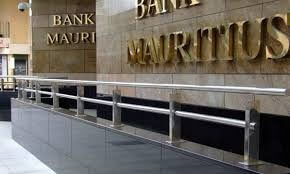
La Banque de Maurice donne-t-elle de fausses informations ?
By a Financial Markets Practitioner
Every communication from the Bank of Mauritius carries the same reassuring headline: gross international reserves of USD 10.2 billion, above every IMF benchmark. The BoM calls the position “commendable.” For a small island, that sounds like a fortress. So why, for six consecutive years, has Mauritius been unable to source dollars in meaningful size? The rupee weakens offshore while the official rate is held artificially firm. Despite a new government and a dream team, the crisis feels permanent.
Problem One: The Reserves Are 50% Smaller Than They Look
At the 11 February 2026 MPC press conference, Governor Thakoor said Gross Official International Reserves “remained comfortable, providing adequate buffers against potential external shocks.” That is misleading. Strip out what belongs to others and what must be repaid, and net usable reserves shrink to around USD 5.6 billion — barely half the headline. USD 1.9 billion belongs to commercial banks; government accounts are earmarked for budget and debt; and since 2021 the BoM has pledged its US Treasury holdings to borrow USD 1.7 billion, inflating the headline while staying invisible. The recent rise is largely gold at USD 2.0 billion — pure price appreciation, not active management. The BoM has not bought a single ounce of gold this decade.
The BoM discloses nothing about portfolio composition, strategy, or risk — despite a legal mandate placing liquidity, security, and return as governing principles. These reserves belong to every Mauritian, and their returns are the institution’s largest revenue source. Yet there is no transparency on those returns, nor on the expenses financing lavish business missions — weeks-long trips, generous per diems, First Class flights for the top three. Against a global energy crisis and a population tightening its belt, that is privilege and grotesque entitlement, not integrity.
Problem Two: Three Exchange Rates. A Confidence Crisis in the Rupee.
Mauritius has not one exchange rate but three: the official BoM rate for dollar is around 46.5, the money changer rate above it, and the offshore market approaching 50 — a gap of nearly 7.5 percent. The spread is the market’s verdict: the official rate is a fiction nobody believes.
Interest rates compound the problem. The Key Repo Rate sits at 4.50 percent — more suited to a disinflationary advanced economy than to a small island running persistent current account deficits. The last time Mauritius ran a surplus was in 2001, when Governor Basant Roi held the Lombard Rate at 13 percent and the rupee attracted foreign debt flows. Since then, rates have been cut steadily and deficits have become permanent. Today’s settings neither anchor the rupee nor reward holders.
The rupee is overvalued — confirmed by market dynamics, twin deficits, and the IMF’s Article IV. Two weeks ago, the BoM had a clear opportunity: the dollar’s rally during Operation Epic Fury gave the cover central banks use to guide their currency toward equilibrium. Instead, it defended 46.5 — burning reserves to preserve a rejected rate at the moment conditions favoured adjustment. A costly error, and public evidence of poor FX judgment at the top.
For months, banks have provided FX liquidity from their own limited flows — but that cannot last. No bank will go short USD against MUR at 46.5 when the offshore rate is at 50; once the rate converges, losses would be material. Net Open Position limits cap how far they can lean. That window is closing fast.
Problem Three: A Market Without the Basic Plumbing
The rupee’s dysfunction runs deeper than bad policy — the basic market infrastructure does not exist. No fix, no benchmark, no centralised price discovery. FX markets globally run on electronic platforms with tight spreads and real-time pricing; Mauritius has not taken the first step. The BoM also maintains a 90bp cap on the bid-offer spread — imposed during ample liquidity, now crushing market-making in illiquid conditions. USD 500 million in unmet demand sits frozen. In an IFC, that queue is not a data point — it is an indictment.
The local bond market is similarly fragmented and not Euroclearable — excluded from the global indices that channel billions in institutional flows. Without it, monetary policy has no transmission channel: rate decisions do not reach businesses or households. This dual breakdown — in FX and in fixed income — is the quiet structural failure beneath every monthly MPC statement.
Problem Four: A Credibility Crisis Nobody Is Fixing
Markets operate on trust. The BoM has offered none for six years — no exchange rate framework, no credible intervention policy, no reserve transparency. Silence, in markets, is its own signal. The governance failures that shattered credibility — politicisation, money-printing for the MIC, weakening of oversight — occurred before November 2024. Governor Sithanen joined the dream team but his tenure ended ten months later in a nepotism controversy. The board he constituted — a lawyer, an HR professional, a technology consultant, an accounting academic, and a regional corporate banker — is laudably diverse but lacks any member with credentials in global macro, FX trading, monetary policy, or institutional asset management. It is optics to please the gallery, not governance.
Politicians have compounded the damage. Words like “junk,” “bankrupt,” and “distressed” thrown casually into parliamentary speeches damage Mauritius’s international standing and sovereign credit profile. The obsession with Moody’s — backward-looking by design — will not resolve a credibility problem being tested in real time in the credit markets.
Where Is the Grit of the Governor?
History’s great central bankers acted at moments of maximum difficulty. Volcker chose recession over inflation; Bernanke deployed untested quantitative easing through the Great Recession; Draghi committed the ECB with three words — “whatever it takes” — and the market believed him. Each made a radical call when the orthodox option was failing, and each did so from a position of institutional independence — free to act in the currency’s long-term interest, not the government’s short-term one. That independence is not a luxury; it is the precondition for every decision that matters. A central bank that waits for political permission to devalue, to hike, or to disclose will always arrive too late. That is the call Mauritius needs now: let the rupee slide gradually to equilibrium, paired with clear signalling and a framework the market can read. It will not be politically convenient — radical decisions rarely are — but it is the only path back to a credible currency. Done well, the adjustment rewards those holding rupees, and holders of USD eventually start selling them back. That is how confidence returns.
Governor Priscilla Thakoor arrived in September 2025 with IMF credentials and goodwill. Six months later, that goodwill is curdling. She served at the IMF as a Senior Economist — not a division chief or mission leader — and running a central bank through an FX crisis is categorically different from advisory work. Media presence has not been matched by market action. On every result that matters — exchange rate, FX backlog, transmission mechanism, MIC — nothing has changed.
Her deputies deepen the concern. First Deputy Governor Rajeev Hasnah — responsible for financial markets and FX liquidity — came from Forges Tardieu, an industrial company, with no central banking background. Second Deputy Governor Ramsamy Chinniah spent four decades in BoM supervision, the department that presided over the failures of Bramer Bank, Banyan Tree Bank, and Silver Bank. None has managed an FX trading book or navigated a live institutional crisis — a gap the country is paying for daily.
The Question That Cannot Wait
Mauritius survived COVID because the BoM then held USD 7.5 billion in clean, unencumbered net reserves, with import bills lower than today. Today, net reserves are lower — around USD 5 billion — encumbered by obligations that did not exist in 2020. While global markets have rallied since 2020, our reserves have delivered no real returns; their purchasing power has eroded. On its core mandate — preserving the purchasing power of reserves and safeguarding financial stability — the BoM has failed. We face the next shock with less firepower and weaker institutions.
The dream team has been in place for fifteen months. The exchange rate remains dysfunctional, the FX backlog keeps growing above USD 500 million, the transmission mechanism does not work. Perhaps the First Deputy Governor has spent those months learning the basics of FX markets and reserves management on the job. If so, Mauritius is paying a steep price for his education — and that price tells us everything about the calibre of the appointment.
This is no longer a question of policy calibration. It is a question of competence, credibility, and the courage to let the market clear. The top three at the Bank of Mauritius are questionable on markets, and they are not supported by a strong team. The financial markets department lacks the FX trading instinct and technical edge to stabilise the rupee and crack the illiquidity problem. That deficit — at the top and at the desk — is now the country’s single greatest macro-financial risk. This crisis will not be solved by a central bank acting alone — least of all one the market no longer trusts. It will be solved through a collegial reset: a competent, credible BoM working with the banks, the exporters, and the market participants it has kept at arm’s length. Until then, the clock runs, the backlog grows, and every Mauritian pays the price.
Sources: Bank of Mauritius — Annual Report 2024, Monthly Statistical Bulletin February 2026, Governor’s MPC Press Conference Statement 11 February 2026, Minutes of 77th MPC Meeting; International Monetary Fund — Article IV Consultation for Mauritius; World Bank Balance of Payments data; Bloomberg and Reuters/LSEG FX market data; historical banking supervision records (Bramer Bank, Banyan Tree Bank, Silver Bank).