
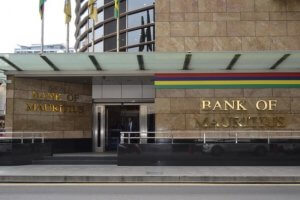
“The income gap between assets and liabilities has been bleeding the Bank’s balance sheet” writes our financial observer.
By a Financial Observer
This week, a former Finance Minister put a legitimate question to the Bank of Mauritius about money creation, money supply, and the health of its balance sheet. The institution did not engage: no figures contested, no data produced, no methodology offered — only a press release dismissing the intervention as fake news. That a Governor with an IMF background should choose a “fake news” narrative over a reasoned response is itself remarkable. It is unprofessional, at odds with the core values of a credible central bank, and one has to wonder whether it was politically motivated.
To be precise: Mr Padayachy was right to question the increase in money supply, even if his framing of it as money printing was imprecise. Recent growth in the money supply was driven by ordinary bank lending — when a bank approves a loan it simultaneously creates a new deposit, the way money is created in any fractional reserve economy. The central bank did not print money in 2025. It printed money in 2020 — approximately Rs 140 billion in a single year. The real debate is not money printing versus credit creation. It is that the Bank has fallen behind the curve: for all the noise about money supply growth, it has done virtually nothing to expand its monetary policy instruments and absorb the excess.
That concern is shared by Sameer Sharma — a former senior investment specialist at the Bank of Mauritius, FRM and CIIA charter holder, writing in a personal capacity. He has independently identified the same “cluster bomb” of compounding risks: an institution that has neither the tools nor the leadership to defuse the problem in front of it.
Too Many Rupees in the System — and the Problem Started Long Before COVID
After the 2008 global financial crisis, the Bank intervened regularly in the foreign exchange market — buying US dollars and selling rupees under Governor Bheenick’s “Operation Reserves Reconstitution” of 2012, which steadily injected MUR liquidity into the banking system. To contain that excess, the Bank issued short-term monetary policy instruments, principally BoM Bills, alongside other rupee-denominated facilities. The structural problem was cost: Mauritian rupee rates have always sat substantially above US dollar rates — near zero through most of that period — so each instrument issued carried an interest burden the dollar reserves could never match. Full sterilisation was unaffordable from the outset, and excess rupee liquidity quietly compounded long before COVID. Governor Basant Roi later combined reserve accumulation with credible work on reducing the funding gap, and as reserves grew and the BoM returned to profitability, sterilisation expanded. No successor since has mastered both.
COVID turned that slow accumulation into a flood. In 2020, the Bank injected approximately Rs 140 billion in a single year — through the Mauritius Investment Corporation, direct government transfers, and budget advances. Governments worldwide responded to the pandemic with extraordinary monetary and fiscal support, and with tourism collapsed and businesses failing, Mauritius’s intervention was defensible in scale. The decision was not the mistake. The execution was.
When the Bank created the MIC as its stabilisation vehicle, it made a cardinal structural mistake Mauritius is still paying for today: it consolidated the MIC directly onto its own balance sheet. Roughly Rs 75 billion of illiquid, mispriced domestic assets — land, equity stakes, illiquid convertible bonds — were absorbed into a balance sheet that should hold only liquid, publicly traded assets. The accountants and senior management failed to set up an off-balance-sheet vehicle, standard practice worldwide, which would have ring-fenced the contamination entirely. The MIC should have been wound down as macro conditions normalised. It was not. The head of accounting responsible for the original design remains at the institution; several others were promoted. No accountability has been applied, because the old guard from Accounting, Financial Markets, and the Secretary to the Board have simply changed political colours.
A Trap of Its Own Making
The income gap between assets and liabilities has been bleeding the Bank’s balance sheet — a carry bleed. The Bank’s monetary policy instruments take different forms — bills, longer-tenor notes, the overnight deposit facility, standing facilities — but all are rupee-denominated liabilities sitting against the foreign reserve portfolio on the asset side. Interest expense on these instruments, together with external borrowings, consistently exceeds what the reserve portfolio earns, before accounting for the MIC’s non-performing assets. There is no clean exit: issue more instruments and the deficit deepens; stop issuing them and unsterilised rupees flood the system; sell the MIC assets and they cannot be valued without large write-downs. As Sharma points out, the total stock of monetary policy instruments has barely moved in six years. The Bank may point to a rising bills programme; what matters is the total, and the total has hardly moved.
Every door is closed. The trap tightens with each passing year.
| Period (end) | BoM Bills / Securities (Rs bn) | Overnight Deposit Facility (avg Rs bn) | Total Monetary Policy Instruments (Rs bn) | Broad Money M2 (Rs bn) |
| June 2019 | ~95 | n/a | ~95 | 564 |
| June 2020 | ~75 | n/a | ~75 | 632 |
| June 2021 | ~90 | n/a | ~90 | 741 |
| June 2022 | ~110 | n/a | ~110 | 818 |
| June 2023 | 138.5 | n/a | 138.5 | 878 |
| June 2024 | 150.3 | ~3 | ~153 | 947 |
| June 2025 | ~80 | ~40 | ~120 | 1,023 |
| Nov 2025 | 65.2 | 55 | ~120 | 1,058 |
| April 2026 | ~70 | ~50 | ~120 | ~1,090 |
Sources: Bank of Mauritius.
The numbers tell the story. Total monetary policy instruments stood at around Rs 95 billion in June 2019. Six years on, they sit at around Rs 120 billion — against broad money M2 that expanded from Rs 564 billion to over Rs 1,000 billion, a rise of more than 80 percent. Absorption capacity has barely moved while the rupee overhang has nearly doubled. Meanwhile, the BoM has been borrowing US dollars to window-dress the balance sheet. The official figure of nearly ten billion dollars in gross reserves is designed to reassure, but it does not subtract external borrowings, monetary policy instruments outstanding, or MIC obligations. Net reserves — what the Bank actually controls free of encumbrance — are substantially lower, and not enough to absorb another shock.
Two decades of rupee overhang. Six years of growing excess. No net progress absorbing it. Every exit is closed.
The Hidden Fuse: Velocity of Money and the Crisis of Confidence in the Rupee
Here is the dimension of this crisis almost nobody is discussing — and the most dangerous of all. Rupees in the banking system only become inflationary when people spend them. Economists call the speed at which money circulates the velocity of money. In 2016, every rupee was circulating roughly once a year; by 2021 that had fallen by 40 percent as households and businesses chose to hold cash rather than spend. That caution has been the only thing preventing the rupee overhang from igniting inflation, and it cannot hold forever. Commercial bank lending has rebounded — the money multiplier is back above 5.3, banks are creating new spending power every day — and the pool of money waiting to be unleashed is growing.
Years of unsterilised excess have also impaired the monetary transmission mechanism itself. The Bank can move the Key Rate, but the signal reaches the real economy distorted and weakened — surplus liquidity blunts the pass-through to market rates, credit, and aggregate demand.
Sharma frames the trap: if growth picks up and spending rises, prices follow. The Bank would then have to raise rates sharply — hard, because six years of inaction have left it no buffer. And raising rates hard at the very moment growth finally takes root would force a crash landing of the economy:
“If the government is ever successful at stimulating economic activity — and let’s assume the best case — then velocity of money will pick up. And the minute it does, inflation will pick up, which will force the central bank to tighten. Because they haven’t done much over the last six years, they will have to do it hard. And that will kill growth before it even starts. You cannot depend on a low velocity of money to save your position forever.”
— Sameer Sharma, former BoM Senior Investment Specialist, FRM, CIIA
And this points to a deeper truth: the cost of inaction rises exponentially with each year that passes. What measured adjustments could have addressed years ago now requires intervention on a far larger scale, and the eventual bill will be paid by the public — in growth foregone, in jobs, in purchasing power.
The same loss of confidence shows in the foreign exchange market. The official rupee rate is published at a level where businesses needing dollars cannot actually buy them — they must queue or turn to informal channels. When the published price and the real price diverge this openly, that is not a market anomaly but a daily record of institutional credibility lost. The rupee has to converge to its equilibrium, and the Bank should stop the piecemeal, blank-firing interventions that simply waste FX reserves — even as the backlog of unfilled commercial demand sits north of USD 500 million. A further, orderly depreciation would, paradoxically, strengthen the balance sheet by lifting the rupee value of the foreign reserve portfolio against rupee-denominated liabilities.
FX Reserves Returns vs. Balance Sheet Costs
Foreign reserves are the nation’s savings invested in global markets, and they must generate enough income to service the Bank’s liabilities while protecting the external purchasing power of a small, import-dependent economy. They are doing neither. Through 2023 — the sharpest rate cycle in twenty years, when US dollar cash yielded above 5 percent — the reserve portfolio significantly underperformed and delivered no real returns. The reason is structural: a G7 central bank can prioritise safety over return because its liabilities are modest, its reserves need not fund operations, and its currency is fully convertible — when it needs dollars, it draws on standing swap lines with the Fed. The Bank of Mauritius has none of those advantages. The cost of its monetary policy instruments, its external borrowings, and the MIC contamination demand a portfolio managed against real liabilities. Instead, it holds no meaningful growth assets and has never been managed around liability matching — which requires a fundamentally different framework from a developed-market central bank.
Investment decisions after COVID were shaped by accounting logic rather than return generation, and those responsible were promoted. This is not bad luck — it is the consequence of managing a distressed balance sheet as though it had no ALM problem. Gold appreciation has papered over the cracks: most of the recent rise in gross reserves is the passive byproduct of the global gold rally, not policy — the Bank has not added an ounce in the last decade. The portfolio’s risk is now heavily concentrated in one unmanaged asset. A sharp correction in gold would sink the headline reserve figure and expose the underlying asset-liability mismatch in full. Any honest assessment must also account for likely write-downs on the MIC’s illiquid assets, widely understood to be materially overstated and still without forensic audit.
A “Dream Team” That Cannot Do This Job
Resolving this crisis requires expertise in unconventional monetary policy, sovereign ALM, multi-asset portfolio construction, and risk management. It also requires leadership, intellectual capital, and grit. The Prime Minister publicly described a “dream team” at the Bank of Mauritius and the Ministry of Finance; in reality, Governor Sithanen deliberately constituted a weak board from his protégés and was gone within ten months, forced out by a nepotism crisis — but the board he installed remains, functioning as a rubber stamp. The current trio is no better equipped: Governor Thakoor, an IMF fiscal economist with no experience in markets, asset-liability management, or central bank balance sheet management; First Deputy Rajeev Hasnah, from Forges Tardieu with no background in financial markets or asset management, now chairing the MIC board; and a Second Deputy who oversaw supervision through the Silver Bank, Banyan Tree, and toxic SBM exposures, and was promoted regardless. No comprehensive forensic audit of the MIC has been ordered — neither under Sithanen, nor under the current leadership. The directors should have resigned with Sithanen. They did not. In their place, the official narrative leans on a different message: a historic gender milestone, glossy features celebrating the first-woman leadership, and a campaign to position the Bank at the forefront of sustainable finance — a posture with no empirical or scientific framework behind it. Diversity creates value, but is not by itself a substitute for competence. The flattering institutional picture, which the IMF’s latest Article IV appears largely to accept, is misleading.
Mr Padayachy was right to ask the question, even if his framing of the mechanism was clumsy. The Bank’s response confirms it has no answer to give. On the balance sheet, on foreign exchange, on monetary policy, and on leadership, the Bank is revealing weakness — not four separate weaknesses but a single one, expressed in four registers. The political leadership has yet to grasp it. The country deserves a real conversation about its central bank, and a dream team that can actually do the job.
DATA NOTE
All figures sourced from Bank of Mauritius official publications: Annual Reports FY2021–FY2025; Monthly Statistical Bulletin February 2026; BoM Act 2004 ss.11(4) and 47. Velocity and money multiplier data: Statistics Mauritius / BoM. IMF Article IV Consultations 2021 and 2025. Federal Reserve H.15 statistical release. JM Bullion (gold spot, April 2026). Reuters, Bloomberg (Sithanen resignation, September 2025). BoM public notices (Silver Bank licence revocation, April 2026). Expert commentary: Sameer Sharma, former BoM Senior Investment Specialist, FRM, CIIA, in a personal capacity. The author has no financial interest in any institution referenced.